Makhana has always been more than a snack in parts of Bihar. It is connected to local agriculture, traditional food habits and the everyday life of communities that have cultivated and consumed it for generations.
Today, Makhana is becoming familiar to consumers across India. You can find it in supermarkets, online stores, health-conscious kitchens and snack boxes. It is available plain, roasted and in a growing range of flavours.
For us at MithilaRam, this growing interest in Makhana is an opportunity to introduce more people to a food that has deep roots in Mithila and Bihar.
Our goal is not simply to package Makhana and sell it. We want people to understand where it comes from, how it fits into Indian food culture and why the connection with Mithila matters.

What Is Makhana?
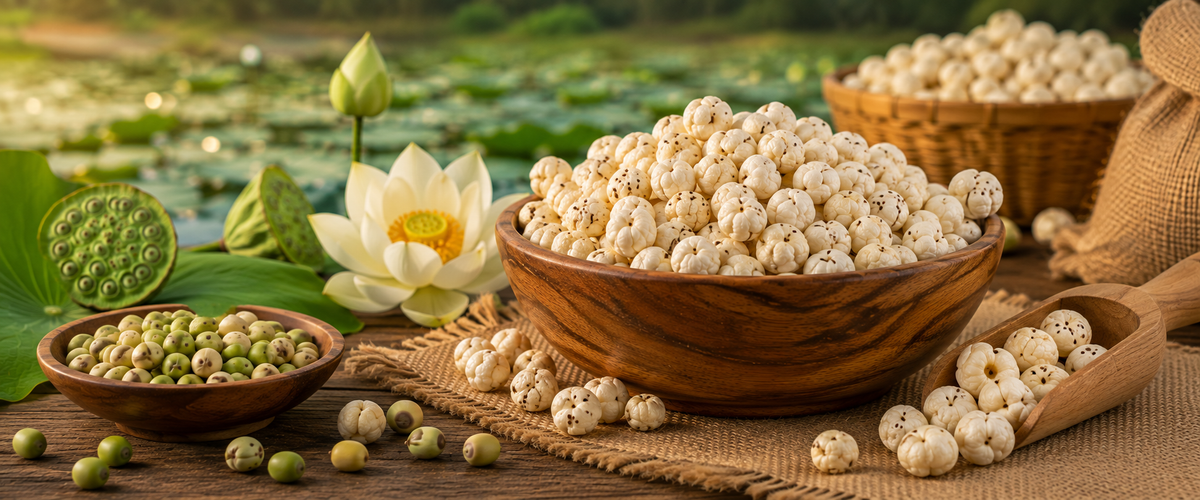
Makhana is commonly known as fox nut or fox nuts. It comes from the seeds of Euryale ferox, an aquatic plant that grows in water bodies.
The seeds are processed and popped to produce the light, white kernels that consumers recognise as Makhana.
Makhana has traditionally been used in several ways in Indian cooking. It can be roasted and seasoned, cooked into desserts such as kheer, added to savoury preparations or used in foods prepared during certain fasting traditions.
Its mild taste is one reason it works well with both sweet and savoury ingredients.
The Connection Between Makhana and Mithila
When we talk about Makhana at MithilaRam, we cannot separate the product from its regional identity.
The Mithila region of Bihar has a longstanding association with Makhana cultivation and consumption. For many families in the region, it is not a newly discovered "superfood"; it is a familiar ingredient with a place in traditional food culture.
Mithila Makhana has also received Geographical Indication (GI) registration, recognising its association with the specified geographical region.
For consumers elsewhere in India, this regional connection can be easy to overlook when Makhana is presented simply as another packaged snack.
We believe that part of our responsibility as a Makhana brand is to keep that story visible.
From a Regional Ingredient to a National Snack
The way Indians consume food is changing.
People still enjoy traditional ingredients, but the way those ingredients reach consumers is different from the past.
Online shopping, modern packaging and ready-to-eat foods have made it possible for regional products to reach households far beyond their traditional markets.
Makhana is a good example.
A consumer in Delhi, Mumbai, Bengaluru or Jaipur may now discover a product that has been part of Bihar's food culture for generations.
That is an interesting transition.
The ingredient hasn't necessarily changed as much as the way people discover and consume it has changed.
Why We Started MithilaRam
The idea behind MithilaRam comes from a simple observation.
Makhana from Mithila has a story worth telling, but a good story alone isn't enough to build a food brand.
Consumers also expect:
- Consistent product quality
- Convenient packaging
- Clear product information
- Different flavour choices
- Easy online access
- A reliable buying experience
We wanted to bring these expectations together with the traditional identity of Makhana.
That is the thinking behind MithilaRam.
We are trying to build a modern brand without losing sight of where the product comes from.
Makhana for Modern Indian Snacking
One reason Makhana fits naturally into modern snacking is its versatility.
It doesn't require an elaborate preparation to become a snack.
Plain Makhana can be roasted at home and seasoned according to individual preference. Ready-to-eat roasted Makhana offers convenience for people who don't want to prepare it themselves.
Flavoured varieties provide another option for consumers who enjoy different tastes.
This gives Makhana a useful place between traditional food and modern convenience.
It can be familiar without feeling outdated.
Our Approach to MithilaRam Makhana
As a brand, we think there is a difference between simply selling a product and helping consumers understand it.
When someone buys a packet of Makhana, they should be able to find useful information about the product rather than having to rely only on advertising claims.
That means paying attention to things such as:
- Ingredients
- Net quantity
- Nutrition information
- Product preparation
- Storage instructions
- Packaging
- Product origin and background
We believe straightforward information creates a better relationship between a food brand and its customers.
Plain, Roasted and Flavoured Makhana
Not everyone eats Makhana in the same way.
That's why different formats have their own place.
Plain Makhana
Plain Makhana is a flexible ingredient. It can be roasted at home, seasoned according to taste or incorporated into recipes.
It is particularly useful for people who prefer to control how their snack is prepared.
Roasted Makhana
Roasted Makhana is convenient for everyday snacking. It can be enjoyed directly from the pack and doesn't require additional preparation.
The texture and flavour can vary depending on the roasting method and ingredients used.
Flavoured Makhana
Flavoured Makhana is designed for consumers who want more variety.
Different seasonings can give Makhana completely different personalities—from spicy and savoury to smoky or more contemporary flavour profiles.
The right choice ultimately comes down to personal preference.

What Makes Makhana Interesting as a Food?
Makhana's appeal isn't based on one single characteristic.
It combines several qualities.
It is a traditional ingredient with a distinctive appearance and texture. It has a mild flavour that works with different seasonings. It can be used in both sweet and savoury recipes, and it can also be turned into a convenient packaged snack.
That versatility is important.
A food doesn't need to be used in only one way to remain traditional.
Sometimes tradition survives precisely because an ingredient can adapt to new eating habits.
Traditional Food, Modern Presentation
At MithilaRam, this is the balance we are trying to achieve.
We don't want to change the identity of Makhana simply to make it fashionable.
At the same time, we recognise that modern consumers expect convenience.
Someone may not have the time to roast Makhana at home every evening. A ready-to-eat product can make it easier to include Makhana in their routine.
Similarly, someone who enjoys cooking may prefer plain Makhana because it gives them greater flexibility.
Both approaches can coexist.
Makhana and the Story of Bihar
There is also a wider story behind the popularity of Makhana.
When a regional agricultural product becomes popular across the country, consumers begin asking questions about its origin.
Where is it grown?
How is it cultivated?
Who produces it?
How does it reach the market?
What makes it different from similar products?
These questions are valuable because they move the conversation beyond the packet.
For Makhana, those questions naturally lead back to Bihar and the communities that have long been associated with its cultivation.
Keeping Mithila at the Centre
The name MithilaRam is intentional.
"Mithila" represents the regional connection that is central to our brand story.
We want someone discovering our products for the first time to understand that there is a place and a culture behind the ingredient.
For us, that connection is more meaningful than using Mithila simply as a marketing word.
It influences how we talk about Makhana and how we want the brand to grow.
From Mithila to Consumers Across India
One of the biggest changes in food commerce is accessibility.
A product that was once mainly known within a particular region can now reach customers hundreds or thousands of kilometres away.
Mithila Makhana is a good example.
Through online commerce, consumers across India can discover Makhana without having to travel to Bihar.
For a brand like MithilaRam, this creates both an opportunity and a responsibility.
The opportunity is to introduce Makhana to new customers.
The responsibility is to represent its regional identity honestly.
What We Want MithilaRam to Stand For
As MithilaRam grows, we want the brand to be associated with a few simple ideas.
Authentic regional connection
We want the relationship with Mithila to remain an important part of our identity.
Product transparency
Customers should have access to useful information about what they are buying.
Everyday accessibility
Makhana shouldn't feel like a food that can only be enjoyed on special occasions.
Modern convenience
Traditional foods can be presented in formats that suit today's lifestyles.
Respect for the ingredient
The story behind Makhana deserves as much attention as the finished product.
More Than a Marketing Story
There is a temptation in food marketing to make every traditional product sound extraordinary.
We would rather take a more realistic approach.
Makhana does not need exaggerated claims to be interesting.
Its story is already compelling.
It comes from a distinctive agricultural tradition. It has been part of Indian food culture for generations. It can be prepared in different ways, and it is now reaching consumers who may never have encountered it before.
That is enough of a story to tell.
How We See the Future of Makhana
We believe the future of Makhana will involve both tradition and innovation.
Traditional recipes will continue to have their place.
At the same time, consumers will continue experimenting with:
- Roasted Makhana
- Flavoured Makhana
- Makhana snack mixes
- New recipes
- Convenient packaged formats
The important thing is that innovation should not erase the product's identity.
As the category develops, we want MithilaRam to remain connected to the ingredient's roots while responding to what modern consumers actually want.
Our Perspective at MithilaRam
Building a food brand from a regional ingredient has taught us something important.
People don't just buy food. They connect with the story behind it.
When someone from outside Bihar discovers Mithila Makhana for the first time, they are discovering a small part of the region's food culture.
That is something we take seriously.
Our aim at MithilaRam is to make that discovery easier—through accessible products, useful information and a brand that keeps Mithila at the centre of its identity.
We know that building trust takes time.
It comes from the product itself, the information we provide and the experience customers have with the brand.
That's the standard we want to keep working toward.
Final Thoughts
Makhana's journey from the traditional food culture of Bihar to modern Indian snack shelves is a story of changing food habits.
The ingredient has remained rooted in its regional heritage while finding new ways to fit into contemporary lifestyles.
MithilaRam is our attempt to be part of that journey.
We want to bring the taste of Mithila to consumers across India without losing sight of the region, people and traditions connected to Makhana.
For us, it isn't about making Makhana something it isn't.
It's about helping more people discover what has been there for generations.
MithilaRam — bringing the taste of Mithila to modern India.
Frequently Asked Questions
What is MithilaRam Makhana?
MithilaRam is a Makhana brand built around the connection between Makhana and the Mithila region of Bihar. The brand offers Makhana in different formats for modern consumers.
What is Mithila Makhana?
Mithila Makhana refers to Makhana associated with the Mithila region of Bihar. The product has recognised GI registration connected with the region.
Why is Mithila associated with Makhana?
Makhana cultivation and consumption have a longstanding connection with parts of Bihar, including the Mithila region.
How can Makhana be eaten?
Makhana can be roasted, seasoned, used in traditional recipes, added to desserts or enjoyed as a ready-to-eat snack.
What types of Makhana does MithilaRam offer?
MithilaRam focuses on different Makhana formats, including plain, roasted and flavoured options.
Is Makhana only a modern snack?
No. Makhana has been used in Indian cooking and traditional food practices long before its recent popularity as a packaged snack.
Buy Premium Flavoured Makhana Online: Gourmet Crunch Delivered to Your Door
How to Buy Makhana Online: 10 Things to Check Before Ordering Fox nuts