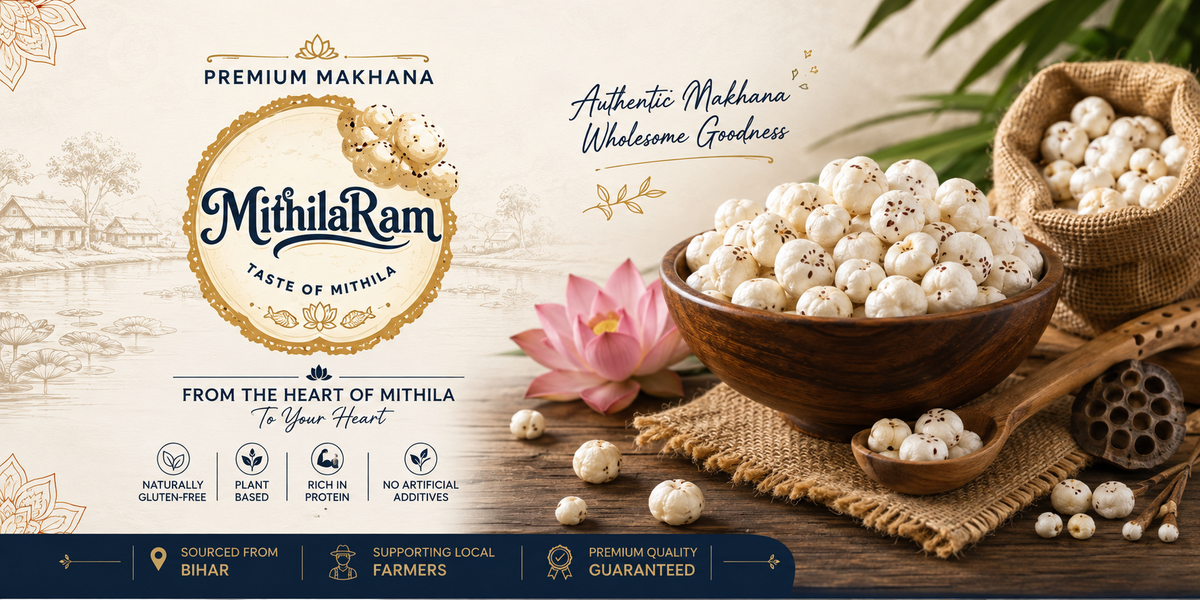
If you have recently noticed makhana, also known as Phool Makhana or fox nuts, appearing more often in snack stores and online marketplaces, you may have wondered: What is makhana, where does it come from, and why is it becoming so popular?
Makhana is a traditional Indian food made from the seeds of the aquatic plant Euryale ferox. It has a particularly strong connection with Bihar and the Mithila region, where its cultivation and processing have been part of local agricultural traditions for generations.
Today, makhana is enjoyed in many forms. It can be roasted and seasoned for a crunchy snack, used in traditional Indian recipes, or prepared at home according to individual tastes.
At MithilaRam, we started with a simple idea: to bring the traditional taste and heritage of Mithila Makhana to consumers across India. Our range includes premium Phool Makhana as well as roasted and flavoured varieties designed for different snacking preferences.
Let's take a closer look at this traditional food and understand what makes makhana special.
What Is Makhana?
Makhana is the edible seed of the aquatic plant Euryale ferox. After harvesting and processing, the seeds become the familiar white, puffed kernels commonly called Phool Makhana.
Makhana is also widely known as fox nuts. You may see these names used across product packaging, recipes, food articles, and online stores.
The finished kernels have a light, crisp texture and a relatively mild taste. This makes them versatile enough to be enjoyed on their own, roasted with seasonings, or used as an ingredient in sweet and savoury Indian dishes.
Although makhana has become increasingly visible in modern snack aisles, it isn't a new food trend. It has a long history in Indian food traditions, particularly in regions where it has traditionally been cultivated.
That combination of traditional heritage and modern versatility is one reason makhana continues to attract new consumers.
Where Does Makhana Come From?
Makhana has a strong agricultural connection with Bihar, one of India's important makhana-producing regions.
The Mithila region in particular is closely associated with makhana cultivation and processing. Unlike crops that grow in ordinary agricultural fields, makhana is traditionally cultivated in ponds and other water bodies.
This makes its production quite different from many familiar crops.
Behind every batch of makhana is a combination of cultivation, harvesting, processing, and local knowledge. These practices have developed over time within farming communities that understand the crop and the environment in which it grows.
For consumers, learning where their food comes from can add another dimension to the product. With Mithila Makhana, the story begins with the agricultural traditions of Bihar before the finished product reaches homes and snack shelves across India.
What Is Mithila Makhana?
Mithila Makhana refers to makhana associated with the Mithila region of Bihar.
Mithila has a distinctive cultural identity, and food is an important part of its heritage. Makhana is one of the traditional foods strongly associated with the region.
For this reason, Mithila Makhana represents more than just a snack. It connects a traditional crop with the land, farming communities, processing practices, and food culture of Mithila.
At MithilaRam, this connection is at the heart of our brand.
We want consumers to discover not only the crunch of makhana but also the story behind it—the connection between Mithila, Bihar, traditional food, and modern snacking.
What Is Phool Makhana?
Phool Makhana is the commonly used name for the white, puffed makhana kernels that people eat as a snack or use in cooking.
The word "phool" refers to the flower-like or puffed appearance of the processed kernels.
Phool Makhana can be prepared in different ways. It may be roasted at home with simple seasonings, incorporated into traditional recipes, or purchased as a ready-to-eat roasted snack.
When buying Phool Makhana, factors such as appearance, freshness, texture, packaging, and product information can help you make a better-informed choice.
How Is Makhana Made?
The journey from cultivation to the makhana in your snack bowl involves several stages.
Traditional methods can vary between producers and regions, but the overall process involves cultivation, harvesting, drying, processing, popping, grading, and packaging.
1. Cultivation
Makhana is traditionally cultivated in ponds and water bodies.
Growing the crop requires practical knowledge and experience because its cultivation environment is different from that of conventional field crops.
2. Harvesting
Once the seeds mature, they are collected from the water.
Harvesting can require considerable manual effort and knowledge of how to handle the crop properly.
3. Cleaning and Drying
The harvested seeds are cleaned and dried before further processing.
Proper handling during these stages is important for preparing the seeds for subsequent processing.
4. Processing and Popping
The dried seeds undergo processing and heating that eventually produces the familiar puffed makhana kernels.
This is the transformation that gives Phool Makhana its distinctive appearance and crunchy texture.
5. Grading and Selection
The popped kernels can be sorted and graded based on characteristics such as size and appearance.
This helps producers create products with more consistent presentation and quality.
6. Roasting and Flavouring
Makhana can then be roasted and seasoned to create ready-to-eat snacks.
This is where traditional makhana meets today's varied taste preferences. Consumers can now find everything from lightly seasoned varieties to more distinctive savoury flavours.
Why Is Makhana Popular as a Snack?
One of the biggest advantages of makhana is its versatility.
Its mild flavour works well with different seasonings, while roasting gives it a satisfying crunch.
Makhana can be enjoyed in several everyday situations, including:
- During an evening break
- With tea or coffee
- At the office
- While working from home
- During travel
- As part of a snack bowl
- During family snack time
- In homemade recipes
This flexibility allows people to enjoy makhana in ways that suit their own routines.
It can be a simple roasted snack one day and an ingredient in a traditional recipe the next.
Is Makhana a Healthy Snack?
Makhana is frequently included in conversations about mindful and better snacking, but it is important to look at the actual product rather than making broad claims about every type of makhana.
Plain makhana and flavoured roasted makhana can have different ingredient profiles.
For example, a flavoured product may contain additional ingredients such as oil, salt, spices, or other seasonings.
Therefore, when choosing packaged makhana, it is sensible to check:
- Ingredient information
- Nutrition information
- Serving size
- Preparation method
- Added seasonings
- Packaging details
Makhana can be part of a varied eating pattern, but no single food should be presented as a replacement for a balanced diet.
This is also why MithilaRam recommends that consumers read the product information available on individual packages before making their choice.
Raw Makhana vs Roasted Makhana
If you're buying makhana for the first time, you may come across both raw Phool Makhana and roasted makhana.
So, what's the difference?
Raw Makhana
Raw Phool Makhana is useful for home cooking.
You can roast it yourself and decide how much oil, salt, or seasoning you want to use. It can also be incorporated into different Indian recipes.
This makes raw makhana a flexible option for people who enjoy preparing food at home.
Roasted Makhana
Roasted makhana is convenient because it is generally ready to eat.
It can be lightly seasoned or available in a variety of flavours. This makes it a practical option for people who want a quick snack without preparing it themselves.
Neither option is universally "better." The right choice depends on how you plan to use makhana.
How to Choose Good-Quality Makhana
Whether you are buying Mithila Makhana online or purchasing it from a local store, don't look at price alone.
Here are some useful things to consider.
1. Check the appearance
Look for a clean, well-presented product that matches the description provided by the seller.
2. Look for freshness
Makhana needs protection from moisture to maintain its characteristic texture.
Packaging should be designed to protect the product during storage and transportation.
3. Read the ingredients
This is especially important for roasted and flavoured varieties.
Check what seasonings, oils, spices, and other ingredients have been added.
4. Check product information
Look for details such as:
- Net quantity
- Ingredients
- Nutrition information
- Batch information
- Best-before date
- Manufacturer or marketer information
- Storage instructions
5. Consider the source
If the origin of your food matters to you, look for information about where the makhana comes from.
For consumers specifically looking for Mithila Makhana from Bihar, the source and brand information can be useful factors in the buying decision.
How Should You Store Makhana?
Makhana can lose its crunch when exposed to moisture.
Once you open a packet, keep the product in an airtight container and store it in a cool, dry place away from direct heat and moisture.
For packaged products, always follow the storage instructions printed on the product label.
If roasted makhana becomes soft after opening, moisture may have affected its texture.
Proper storage helps preserve the texture and flavour of your makhana for longer.
Different Ways to Enjoy Makhana
Makhana is remarkably versatile.
Enjoy It Roasted
Plain or lightly seasoned roasted makhana can be enjoyed straight from a bowl.
Try Flavoured Makhana
If you enjoy different tastes, flavoured varieties provide options ranging from tangy and savoury to spicy combinations.
Add It to Recipes
Makhana can be used in a range of traditional sweet and savoury preparations.
Make a Snack Bowl
Combine roasted makhana with other suitable ingredients to create your own snack mix.
Enjoy It During Tea Time
A bowl of crunchy roasted makhana can be an easy option for an evening snack.
Why Choose MithilaRam Makhana?
MithilaRam was created around a simple idea: bring the traditional taste and heritage of Mithila Makhana to modern consumers.
Our connection with Mithila is central to the brand.
We offer premium Phool Makhana alongside roasted and flavoured varieties so that customers can choose according to their preferences.
Our range includes options such as:
- Premium Phool Makhana
- Barbecue Roasted Makhana
- Tangy Tomato Roasted Makhana
- Himalayan Pink Salt Roasted Makhana
- Chatpata Masala Roasted Makhana
- Cheese & Chilli Roasted Makhana
- Salt & Pepper Roasted Makhana
- Cream & Onion Roasted Makhana
- Peri Peri Roasted Makhana
Our aim is to make traditional Mithila Makhana easier to discover and enjoy while maintaining the connection between the product and its Bihar heritage.

Explore All MithilaRam Makhana
Frequently Asked Questions About Makhana
What is makhana?
Makhana is the edible seed of the aquatic plant Euryale ferox. After processing and popping, it becomes the white, puffed food commonly known as Phool Makhana or fox nuts.
Where does makhana come from?
Makhana has a strong connection with Bihar, particularly the Mithila region. It is traditionally cultivated in ponds and water bodies.
What is Mithila Makhana?
Mithila Makhana refers to makhana associated with the Mithila region of Bihar, which has a long-standing connection with makhana cultivation and processing.
What are fox nuts?
Fox nuts is a commonly used name for makhana. You may also see terms such as Phool Makhana used for the same food product in consumer markets.
Is Phool Makhana the same as makhana?
Phool Makhana is the commonly used term for the puffed makhana kernels that are eaten as a snack or used in Indian cooking.
Is roasted makhana ready to eat?
Ready-to-eat roasted makhana is prepared and seasoned for convenient consumption. Always follow the storage and consumption instructions provided on the product packaging.
How should makhana be stored?
Store makhana in a cool, dry place away from moisture. After opening, an airtight container can help preserve its crunch.
Can makhana be used in recipes?
Yes. Makhana can be used in both sweet and savoury preparations and can also be roasted with different seasonings.
Can I buy Mithila Makhana online?
Yes. Premium Phool Makhana, roasted makhana, and flavoured varieties are available online from different sellers and brands.
From the Heart of Mithila to Modern Snack Shelves
Makhana's journey is a fascinating example of how a traditional Indian food can find a place in modern lifestyles without losing its connection to its roots.
From the ponds and farming communities of Bihar to kitchens and snack shelves across India, makhana continues to evolve.
For someone discovering it for the first time, makhana is more than just a crunchy snack. It is connected to Mithila's agricultural heritage, traditional food culture, and generations of local knowledge.
At MithilaRam, we want to make that heritage easier for people across India to discover.
Whether you prefer traditional Phool Makhana, roasted makhana, or flavoured varieties, there is a way to enjoy this distinctive food according to your taste and lifestyle.
Discover MithilaRam and experience the taste of Mithila in every crunch.
About MithilaRam
MithilaRam is a makhana brand focused on bringing the taste and heritage of Mithila Makhana to consumers across India.
Our range includes premium Phool Makhana, roasted makhana, and flavoured varieties. We aim to combine the traditional identity of Mithila Makhana with convenient options for modern snacking.
Mithila Makhana Reaches Australia by Sea: What the New Export Means for Bihar