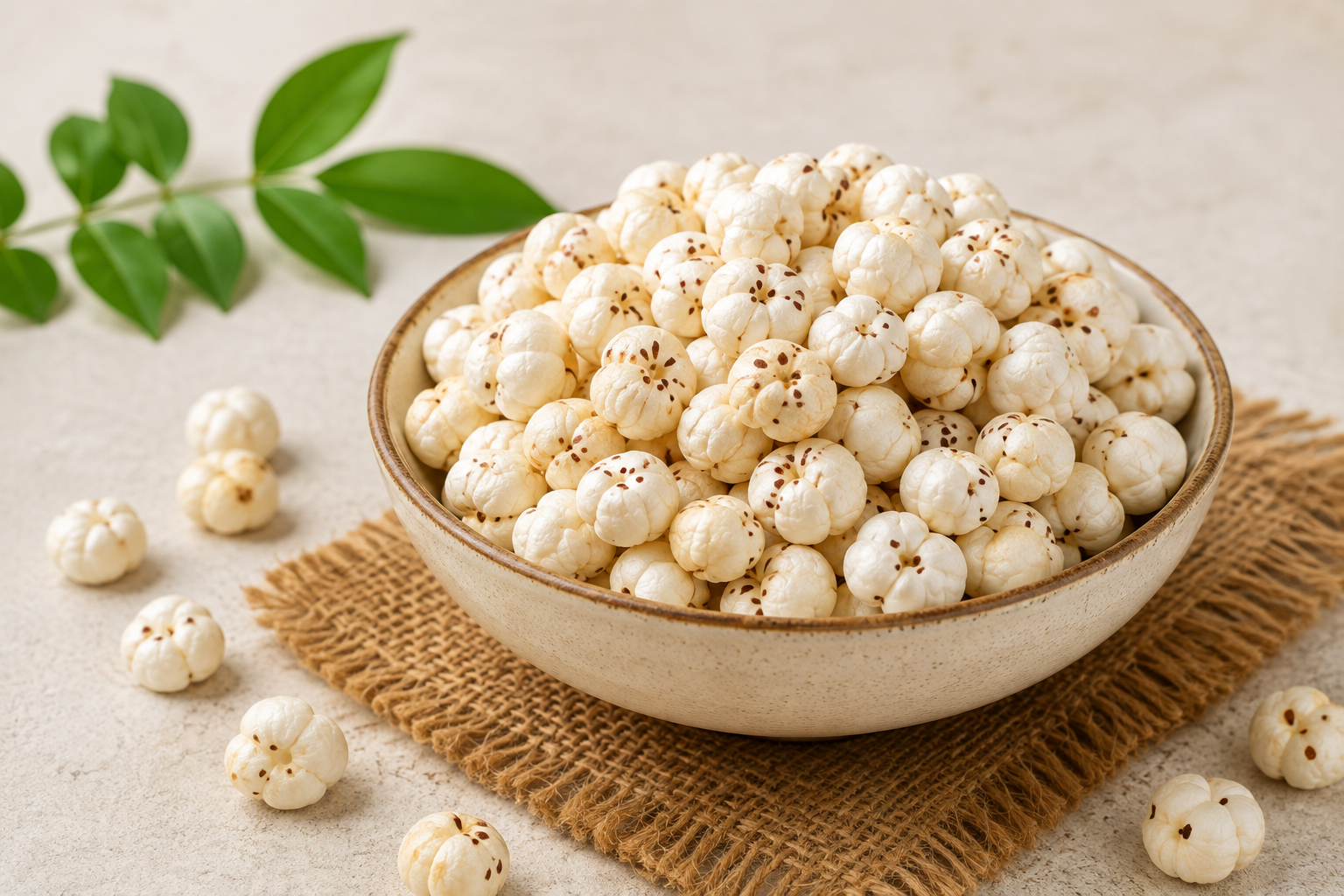
Makhana is one of those ingredients that can be transformed with very little effort. When properly roasted, plain Phool Makhana develops a light, crisp texture that makes it an easy snack to prepare at home.
The process is simple, but getting the texture right requires a little attention. Too little roasting can leave Makhana soft, while excessive heat can burn the outside before the inside becomes properly crisp.
The good news is that you don't need complicated equipment.
A pan, a little patience and your preferred seasoning are usually enough to make roasted Makhana at home.
In this guide, we'll explain how to roast Makhana, how to check whether it is properly crisp, which seasonings work well, how to avoid common mistakes and how to store your roasted Makhana.
What Is Roasted Makhana?
Roasted Makhana is Phool Makhana that has been heated until it develops a crisp, crunchy texture.
Plain Makhana has a relatively mild taste, which makes it suitable for different seasonings.
You can keep it simple with salt and pepper or experiment with spices and flavours according to your preference.
Roasted Makhana can be prepared at home using a stovetop pan, while ready-to-eat roasted and flavoured varieties are also available.
If you're new to Makhana, you may want to read our guide:
[What Is Phool Makhana? A Complete Guide to Fox Nuts]
It explains what Phool Makhana is, where it comes from and how it differs from other forms of Makhana.
Why Roast Makhana?
Plain Makhana has a mild flavour and a naturally light texture. Roasting changes the texture and makes it more suitable for snacking.
A properly roasted piece should feel:
- Light
- Crisp
- Crunchy
- Dry rather than chewy
Roasting also gives you the opportunity to add flavours that match your taste.
For example, you can make:
- Salt and pepper Makhana
- Masala Makhana
- Pudina Makhana
- Peri peri Makhana
- Barbecue Makhana
- Chilli Makhana
The exact ingredients are completely up to you.
How to Roast Makhana on a Pan
The easiest method is dry roasting Makhana in a heavy-bottomed pan or skillet.
Ingredients
For a simple batch, you need:
- 2 cups Phool Makhana
- 1–2 teaspoons oil or ghee, optional
- Salt, according to taste
- Your preferred seasoning
You can adjust the quantities depending on how much you want to prepare.
Step 1: Heat the Pan
Place a clean, dry pan over low to medium-low heat.
Avoid starting with very high heat.
Makhana is relatively light, and high heat can cause the outer surface to brown quickly while making it difficult to achieve an even texture.
A slower roast gives you more control.
Step 2: Add the Makhana
Add the Phool Makhana to the warm pan.
Spread it out as much as possible so that the pieces can roast evenly.
If you're making a large batch, work in smaller portions rather than overcrowding the pan.
Step 3: Roast Slowly
Keep stirring or tossing the Makhana every few minutes.
The goal is to expose different sides of the pieces to the heat.
Continue roasting over low to medium-low heat.
The exact time can vary depending on the quantity, pan and heat level, so don't rely only on a timer.
Instead, pay attention to the texture.
How Do You Know When Makhana Is Properly Roasted?
This is one of the most useful things to know when making Makhana at home.
Take one piece from the pan and allow it to cool for a moment.
Then bite into it.
Properly roasted Makhana should be:
Crisp and crunchy.
If it feels soft, chewy or slightly rubbery, it needs more roasting.
This simple texture test is often more useful than following an exact cooking time because different stoves, pans and quantities can produce different results.
Should You Add Oil or Ghee?
You don't necessarily need oil to roast Makhana.
Dry roasting
With dry roasting, the Makhana is heated directly in the pan without added oil.
This is a straightforward method if you want to keep the preparation simple.
Oil or ghee roasting
You can also add a small amount of oil or ghee.
This can help seasoning stick to the Makhana and can contribute to the overall flavour.
The choice depends on your recipe and dietary preferences.
If you're using a packaged roasted Makhana product, check its ingredient list to see what oil or other ingredients have been used.
When Should You Add Seasoning?
Timing matters.
If you add seasoning too early, some spices may become overly toasted or bitter.
A simple approach is:
- Roast the Makhana until crisp.
- Reduce the heat or turn it off.
- Add your oil or ghee if using.
- Add the seasoning.
- Toss thoroughly.
- Allow the Makhana to cool before storing.
This helps distribute the seasoning more evenly.
Easy Salt and Pepper Makhana
For a simple everyday version, try salt and pepper.
You need:
- Roasted Makhana
- A small amount of oil or ghee
- Salt
- Black pepper
Toss everything together while the Makhana is still warm.
Start with a small amount of seasoning and adjust after tasting.
This is one of the easiest ways to enjoy roasted Makhana without overpowering its natural flavour.
Masala Makhana
If you prefer a stronger flavour, you can create a simple masala version.
Try combining:
- Salt
- Roasted cumin powder
- Mild chilli powder
- Black pepper
- A small amount of dry mango powder, if preferred
Add the seasoning after roasting and toss thoroughly.
You can adjust the spice level according to your preference.
Peri Peri Makhana
For a spicier snack, use a ready-made peri peri seasoning or create your own spice blend.
The amount you use will depend on how strong you want the flavour to be.
Add the seasoning after roasting and toss the Makhana while it is still warm.
Always check the ingredients of packaged seasonings if you have specific dietary requirements.
Barbecue Makhana
Barbecue flavour is another option for people who prefer smoky, savoury snacks.
You can use a barbecue seasoning blend after roasting the Makhana.
Alternatively, if you don't want to prepare the seasoning yourself, ready-to-eat barbecue roasted Makhana is available from brands such as MithilaRam.
Explore MithilaRam Barbecue Roasted Makhana →
How to Make Makhana Extra Crispy
If your goal is a particularly crisp texture, keep these tips in mind.
1. Use low to medium-low heat
A slower roast gives you better control.
2. Stir regularly
This helps distribute the heat more evenly.
3. Don't overcrowd the pan
Too much Makhana at once can make even roasting more difficult.
4. Test before removing from the heat
Taste one piece after it has cooled slightly.
5. Let it cool completely
Freshly roasted Makhana can feel different while hot.
Allowing it to cool helps you judge the final texture more accurately.
Common Mistakes When Roasting Makhana
Even though roasting Makhana is simple, a few mistakes can affect the result.
Using very high heat
High heat may cause uneven browning or burning.
Better approach: Roast slowly and stir regularly.
Adding too much oil
Too much oil can make the final snack feel heavy and may affect the crisp texture.
Better approach: Use only the amount needed for your recipe.
Adding seasoning too early
Some spices can become unpleasant if exposed to high heat for too long.
Better approach: Add seasoning near the end.
Not testing the texture
Looking at Makhana isn't always enough to determine whether it is ready.
Better approach: Cool one piece and taste it.
Storing it while warm
Warm food can release moisture inside a closed container.
Better approach: Let the roasted Makhana cool completely before storing.
How to Store Roasted Makhana
Proper storage is important if you want to maintain the crunchy texture.
After roasting:
- Allow the Makhana to cool completely.
- Transfer it to a clean, airtight container.
- Keep the container in a cool, dry place.
- Protect it from moisture.
- Avoid unnecessary exposure to humid air.
If you notice that your Makhana has become soft, moisture may have affected its texture.
For packaged products, always follow the storage instructions printed on the package.
Can You Roast Makhana Without Oil?
Yes.
Dry roasting is one of the simplest ways to prepare Makhana.
You simply place the Phool Makhana in a dry pan and roast it slowly until crisp.
This method works particularly well when you want to season the Makhana afterward.
However, if you're making a flavoured version, a small amount of oil or ghee can help certain seasonings adhere to the surface.
How Long Does It Take to Roast Makhana?
There isn't one universal roasting time.
The time depends on:
- Quantity of Makhana
- Pan size
- Type of pan
- Heat level
- Stove
- Starting temperature
- Desired texture
Instead of depending entirely on a fixed number of minutes, use texture as your main indicator.
Once the Makhana is crisp when tested after cooling slightly, it is ready.
This approach is more reliable than giving every reader the same cooking time regardless of their equipment.
Homemade vs Ready-to-Eat Roasted Makhana
Both options have their advantages.
| Homemade Makhana | Ready-to-Eat Makhana |
|---|---|
| Choose your own seasoning | Convenient |
| Control the amount of oil used | No preparation required |
| Experiment with flavours | Available in multiple flavours |
| Freshly roasted at home | Easy to carry |
| Requires preparation time | Ready to eat |
Make it at home if:
You enjoy cooking and want complete control over the seasoning.
Choose ready-to-eat if:
You want a convenient snack without spending time roasting and seasoning it yourself.
How to Choose Good Phool Makhana for Roasting
If you're buying plain Makhana for home roasting, look at the product carefully.
Consider:
Appearance
Choose a product with a clean, reasonably consistent appearance.
Texture
The Makhana should be suitable for roasting and not show obvious signs of excessive moisture.
Packaging
Good packaging helps protect the product from moisture.
Product information
Check:
- Net quantity
- Ingredients
- Manufacturer information
- Best-before date
- Storage instructions
Source
If regional origin matters to you, look for clearly stated information about the product and its source.
Roasting Makhana for Different Occasions
One reason homemade roasted Makhana is so convenient is that you can adjust the flavour for different situations.
For an evening snack
Try salt and pepper or a mild masala.
For a movie night
Experiment with barbecue or peri peri seasoning.
For children
A mild seasoning may be more suitable depending on their preferences and dietary needs.
For guests
Prepare two or three flavours and serve them together.
For travel
Allow the Makhana to cool completely and store it in a suitable airtight container.
Is Roasted Makhana a Good Alternative to Regular Snacks?
Makhana can be one option among many snack choices.
The important thing is to look at the complete product, not just the word “Makhana.”
Plain roasted Makhana and heavily seasoned packaged Makhana can have different ingredient and nutrition profiles.
If you're choosing packaged snacks regularly, compare:
- Serving size
- Ingredients
- Sodium
- Added oils
- Overall nutrition information
This gives you a more realistic picture of what you're eating.
Why Makhana Works Well With Different Flavours
Plain Makhana has a relatively mild flavour.
That makes it a useful base for seasoning.
You can create very different taste profiles from the same basic ingredient:
Mild: Salt & pepper
Herby: Pudina
Spicy: Peri peri
Smoky: Barbecue
Rich and savoury: Cheese & chilli
This flexibility is one reason roasted Makhana has become popular as a modern snack.
MithilaRam Roasted Makhana
At MithilaRam, we bring Makhana into convenient formats for modern snacking while keeping its connection with the Mithila region at the centre of our brand story.
Our range includes plain Phool Makhana, roasted Makhana and flavoured Makhana, allowing customers to choose according to their preferences.
If you prefer the convenience of ready-to-eat Makhana, explore our collection:
Shop MithilaRam Makhana Online →
Final Thoughts
Learning how to roast Makhana at home is simple once you understand the most important part: control the heat and pay attention to the texture.
Start with plain Phool Makhana, roast it slowly, stir regularly and test a piece before removing it from the pan. Once you've achieved the crunch you like, experiment with different seasonings.
You can keep things simple with salt and pepper or try stronger flavours such as masala, pudina, peri peri or barbecue.
And if you prefer convenience, ready-to-eat roasted Makhana gives you the same basic idea without the preparation.
Makhana's versatility is what makes it interesting. A traditional ingredient can become a simple homemade snack, a flavoured treat or part of a modern everyday snack routine.
Frequently Asked Questions
How do you roast Makhana at home?
Heat a pan over low to medium-low heat, add the Makhana and roast slowly while stirring regularly. Test a piece after it cools slightly. It should be crisp and crunchy.
Can I roast Makhana without oil?
Yes. Makhana can be dry roasted in a pan. Oil or ghee is optional and can be added depending on your recipe and seasoning.
How do I make Makhana crispy?
Roast it slowly over controlled heat, stir regularly and avoid overcrowding the pan. Test the texture after cooling a piece.
Why is my roasted Makhana not crunchy?
It may need additional roasting, or it may have absorbed moisture. Continue roasting carefully and make sure it is completely cool before storing.
Can I add spices while roasting Makhana?
You can, but adding delicate spices near the end often gives you better control and reduces the chance of burning them.
How should roasted Makhana be stored?
Allow it to cool completely, then keep it in an airtight container in a cool, dry place away from moisture.
Can I use flavoured Makhana instead of roasting plain Makhana?
Yes. Ready-to-eat flavoured Makhana is already roasted and seasoned, so it can be enjoyed directly from the pack.
What Is Phool Makhana? A Complete Guide to Fox Nuts
Roasted Makhana vs Raw Makhana: Which One Should You Choose?