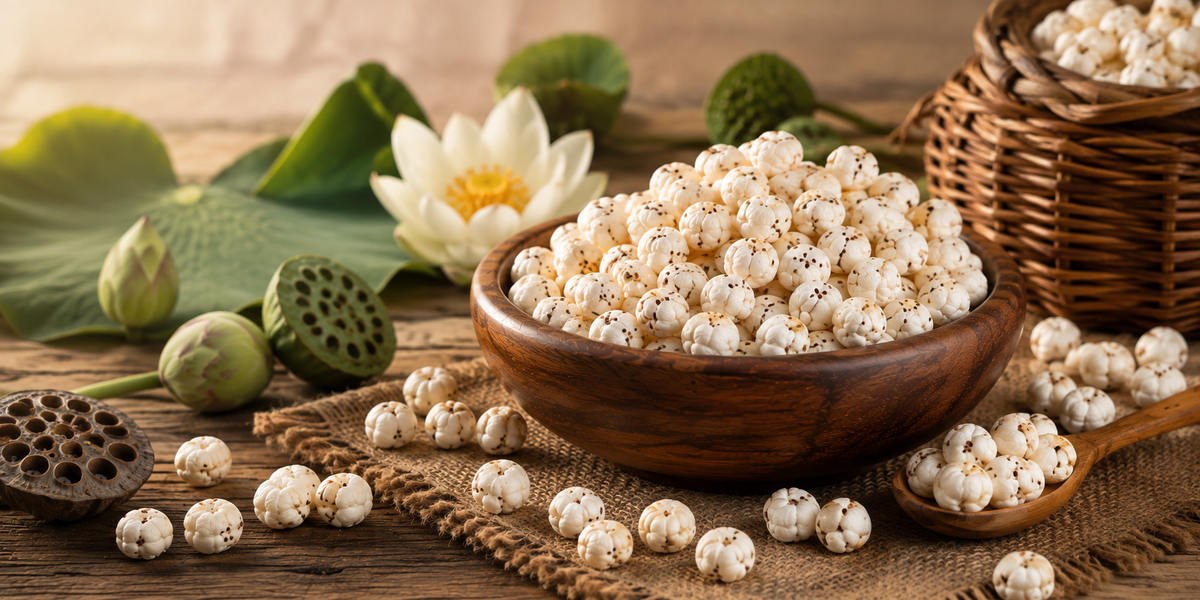
Walk through an Indian supermarket today and you may notice a light, white, puffed snack that looks quite different from conventional chips or namkeen. This is Phool Makhana, commonly known as fox nuts.
Makhana has been part of Indian food traditions for generations. It is particularly associated with Bihar and the Mithila region, where its cultivation and processing have become an important part of the local agricultural heritage.
In recent years, Makhana has also found a place in modern snacking. You can now find it as plain Phool Makhana, roasted Makhana and a growing variety of seasoned flavours.
But what exactly is Phool Makhana? Where does it come from? How is it prepared? And what should you consider when buying it?
Let's take a closer look.
What Is Phool Makhana?
Phool Makhana is the puffed form of the seeds of the aquatic plant Euryale ferox.
The plant grows in water-based environments, and its seeds undergo several stages of harvesting and processing before becoming the familiar white, puffed product sold in markets.
Plain Phool Makhana has a mild flavour. Once roasted, it develops a light and crunchy texture, making it suitable for both traditional recipes and modern snacks.
One of its useful characteristics is its versatility. It can be seasoned according to personal preference or used as an ingredient in different dishes.
You may find Makhana used in:
- Roasted snacks
- Flavoured snack mixes
- Traditional Indian dishes
- Desserts
- Fasting preparations
- Homemade recipes
This combination of versatility and convenience has helped Makhana become increasingly familiar to consumers beyond the regions where it has traditionally been produced.
Is Phool Makhana the Same as Fox Nuts?
In the food market, Phool Makhana and fox nuts are commonly used names for the same puffed Makhana product.
You may also see the terms:
- Makhana
- Phool Makhana
- Fox nuts
- Makhana fox nuts
The name can vary depending on the market, brand or packaging.
If you are purchasing packaged Makhana, the more important information is what's actually inside the pack. Check the ingredient list, nutrition information, net quantity, storage instructions and manufacturer details before making your choice.
Where Does Makhana Come From?
Makhana has a strong connection with India's eastern regions, particularly Bihar.
The crop is cultivated in water-based environments, making its farming process different from many familiar field crops.
Bihar has become especially well known for Makhana production, and the ingredient has an important connection with the agricultural traditions of the Mithila region.
The journey from cultivation to the finished puffed product involves multiple stages. Harvesting, drying, processing, roasting and popping all contribute to the final product consumers recognise as Phool Makhana.
Behind a simple bowl of Makhana is therefore a longer agricultural and processing journey involving farmers, processors and food businesses.
What Is Mithila Makhana?
Mithila Makhana refers to Makhana associated with the Mithila region of Bihar.
Its regional identity is an important part of the product's story. In 2022, Mithila Makhana received a Geographical Indication (GI) tag, recognising its connection with its geographical region.
A GI designation helps identify products whose characteristics, reputation or other qualities are associated with a particular geographical area.
For Makhana, this recognition highlights the relationship between the product and the region where it has long been cultivated and processed.
This regional connection is also an important part of the story behind the MithilaRam brand.
Related reading: What Is Mithila Makhana? Discover Its Origin and Heritage
How Is Phool Makhana Produced?
The process of turning Makhana seeds into the puffed product found in shops involves several stages.
While exact methods can vary between producers, the overall journey can be understood broadly.
1. Cultivation
Makhana is cultivated in water-based environments. Farmers manage the crop throughout its growing period.
2. Harvesting
Once the seeds mature, they are collected as part of the harvesting process.
3. Cleaning and drying
The harvested material is processed and dried to prepare it for the next stages.
4. Processing and popping
The seeds undergo traditional and/or mechanised processing that produces the characteristic puffed form.
5. Sorting
The finished Makhana can be sorted according to characteristics such as size and appearance.
6. Packaging
Finally, the processed Makhana is packed to protect it from moisture and help preserve its quality.
The exact processing method, equipment and handling practices can differ from one producer to another.
Why Has Makhana Become So Popular?
Makhana's growing popularity is partly due to its flexibility.
Plain Makhana has a relatively mild taste, so it can take on different seasonings without losing its characteristic texture.
For example, it can be prepared with simple salt and pepper or combined with more distinctive flavours such as barbecue, peri peri or pudina.
This makes it possible for one traditional ingredient to fit into several different eating occasions.
Makhana is also easy to serve. Once roasted, it can be eaten directly as a snack without the preparation required for many traditional dishes.
How Can You Eat Phool Makhana?
There isn't one correct way to enjoy Makhana.
Here are some popular options.
1. Plain Roasted Makhana
Plain Makhana can be roasted until crisp and enjoyed on its own.
You can also season it at home according to your preference.
2. Salt and Pepper Makhana
Salt and pepper provide a simple savoury combination that allows the natural character of roasted Makhana to remain noticeable.
3. Flavoured Makhana
Ready-to-eat flavoured Makhana is a convenient option for people who want more variety.
Depending on the brand, you may find flavours such as barbecue, peri peri, pudina, cheese and chilli, or other seasoning combinations.
4. Makhana in Indian Recipes
Makhana is also used in traditional Indian preparations.
It can be incorporated into savoury dishes and desserts, while certain Makhana preparations are also associated with fasting traditions.
Its ability to work in both sweet and savoury recipes makes it a versatile ingredient.
Is Phool Makhana a Healthy Snack?
Makhana is often marketed as a healthy snack, but it is important to avoid treating every Makhana product as nutritionally identical.
Plain, roasted and flavoured Makhana can have different nutritional profiles.
Ingredients such as oil, seasoning, salt and other flavouring components can change the nutritional composition of a finished product.
If nutrition is important to you, check the product's nutrition panel for information such as:
- Energy
- Protein
- Total fat
- Carbohydrates
- Dietary fibre
- Sodium
- Serving size
This is more useful than relying on broad statements about whether a food is simply “healthy” or “unhealthy.”
For packaged products, the manufacturer's nutrition information and ingredient declaration should be your primary reference.
What Should You Look for When Buying Phool Makhana?
Whether you're buying plain Makhana or a flavoured variety, a few simple checks can help you choose a suitable product.
1. Check the ingredients
Look at the complete ingredient list, particularly when buying seasoned Makhana.
Different flavours can contain different oils, spices, seasonings and other ingredients.
2. Look at the nutrition panel
If you compare several products, check their nutrition information rather than relying only on marketing claims.
3. Check the packaging
Makhana can be affected by moisture. Good packaging helps protect the product and maintain its texture.
4. Check the net quantity
Make sure you know how much product you're actually purchasing.
5. Look at the date information
Check the best-before date and follow the manufacturer's storage instructions.
6. Consider the flavour
If you're buying ready-to-eat Makhana, choose a flavour that matches your preference.
Plain, Roasted or Flavoured Makhana: Which Should You Choose?
The best option depends on how you want to use Makhana.
| Type | Suitable for |
|---|---|
| Plain Phool Makhana | Cooking and home seasoning |
| Roasted Makhana | Simple ready-to-eat snacking |
| Flavoured Makhana | Convenient snacks with distinctive flavours |
Plain Phool Makhana
Plain Makhana gives you more control over preparation. You can roast and season it yourself or use it in recipes.
Roasted Makhana
Roasted Makhana is convenient when you want a crisp snack without preparing it from scratch.
Flavoured Makhana
Flavoured varieties offer a ready-to-eat option for people who enjoy stronger or more varied tastes.
How to Keep Makhana Crisp
Makhana's texture can change when it is exposed to moisture.
To help maintain its crunch:
- Store it according to the package instructions.
- Keep it in a cool, dry location.
- Protect it from direct sunlight.
- Keep the package properly sealed after opening.
- Avoid storing it in areas with high moisture.
If you're using an opened package, resealing it properly can help preserve the product's texture.
Makhana and the Changing Indian Snack Market
One of the interesting things about Makhana is how a traditional ingredient has adapted to modern food habits.
For generations, Makhana has been used in Indian households, particularly in regions where it is traditionally cultivated.
Today, the same ingredient is increasingly available in convenient packaged formats.
Roasted and flavoured products make it possible to enjoy Makhana without preparing it at home.
This has helped introduce the ingredient to consumers who may not have grown up eating it.
At the same time, its connection with Bihar and Mithila remains an important part of its identity.
MithilaRam's Approach to Makhana
At MithilaRam, our focus is on making Makhana available in convenient formats while celebrating its connection with Mithila.
Our range includes Phool Makhana, roasted Makhana and flavoured varieties, giving customers different ways to enjoy this traditional ingredient.
Whether you prefer a classic taste or a more contemporary flavour, Makhana offers plenty of possibilities for everyday snacking.
Final Thoughts
Phool Makhana is more than a modern packaged snack. It is a traditional Indian food with a strong connection to Bihar and the Mithila region.
Its mild taste and versatile texture allow it to be used in everything from traditional recipes to convenient ready-to-eat snacks.
As more people discover Makhana, understanding its origin, processing, ingredients and different forms can help consumers make better-informed choices.
Whether you choose plain Phool Makhana, roasted Makhana or a flavoured variety, the best approach is to read the product label, understand the ingredients and choose a product that suits your preferences.
Want to explore Makhana from MithilaRam?
Shop MithilaRam Makhana Online
Frequently Asked Questions About Phool Makhana
What is Phool Makhana?
Phool Makhana is the puffed edible form of seeds from the aquatic plant Euryale ferox. It is used in Indian cooking and is also consumed as a roasted snack.
Is Phool Makhana the same as fox nuts?
Yes. Phool Makhana and fox nuts are commonly used names for the puffed Makhana product.
Where is Makhana grown in India?
Makhana is grown in several parts of India, with Bihar being particularly well known for its cultivation and production.
What is Mithila Makhana?
Mithila Makhana refers to Makhana associated with the Mithila region of Bihar. It received GI recognition in 2022.
Can Makhana be eaten without roasting?
Makhana is commonly roasted for snacking, while plain Makhana can also be used as an ingredient in various recipes.
How should I store roasted Makhana?
Keep roasted Makhana in a cool, dry place and protect it from moisture. Follow the storage instructions on the package.
What is the difference between plain and flavoured Makhana?
Plain Makhana contains fewer added flavouring ingredients, while flavoured Makhana is seasoned with additional ingredients to create a specific taste.
What Is Mithila Makhana? The Story of Bihar's Traditional Makhana
How to Roast Makhana at Home: Easy Tips for Crispy Fox Nuts