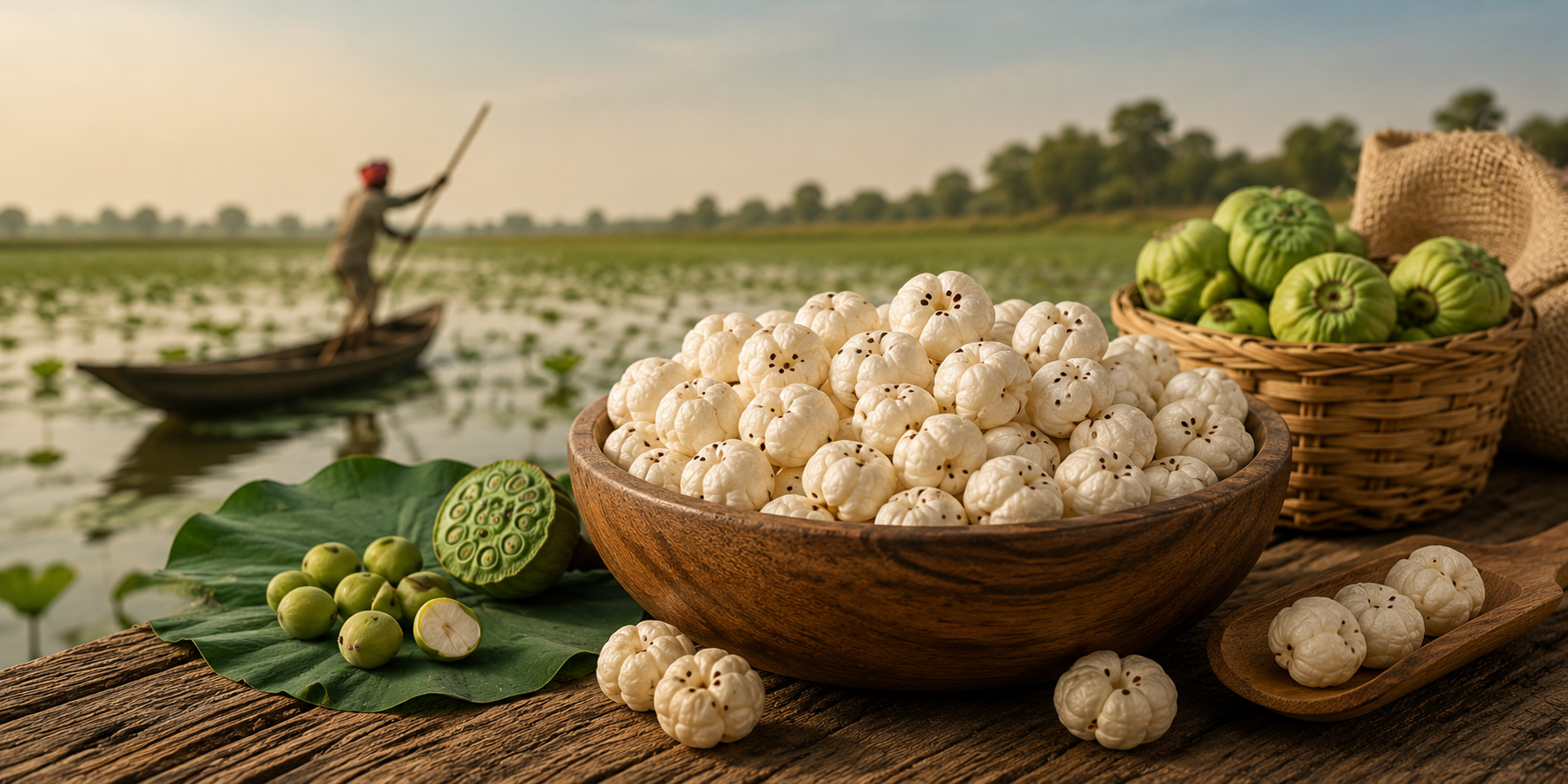
When people talk about Makhana today, the conversation often focuses on healthy snacking, convenient food choices and new flavours. But behind every bowl of Makhana is a much older story—one connected to the wetlands, farms, food traditions and communities of Bihar.
For us at MithilaRam, that story matters.
Makhana is not simply another packaged snack. Mithila Makhana represents a strong connection between a traditional agricultural product and the Mithila region of Bihar. Its identity has become increasingly recognised as Makhana moves from traditional kitchens into modern Indian households.
The Government of India's Geographical Indications Registry records Mithila Makhana as a registered geographical indication associated with Bihar, with its registration dated August 16, 2022.
So, what makes Mithila Makhana special?
It is the combination of place, tradition, agriculture, product versatility and evolving consumer interest.
Let's explore its story.
What Is Mithila Makhana?
Mithila Makhana refers to Makhana associated with the Mithila region of Bihar and recognised under a Geographical Indication registration.
Makhana is commonly known as fox nuts and is produced from the seeds of the aquatic plant Euryale ferox.
While Makhana is now available throughout India, Bihar has a particularly important place in its production and cultural history.
The GI registration gives Mithila Makhana a recognised geographical identity rather than treating it simply as a generic food product. The official GI record identifies Bihar as its geographical area.
For consumers, this geographical connection provides useful context when they are comparing different Makhana products.

Why Is Mithila Makhana Connected With Bihar?
Mithila is a culturally rich region associated with northern Bihar and parts of the surrounding area. Makhana cultivation has developed alongside the region's water-rich agricultural environment.
The Bihar government's documentation describes Makhana as an important crop for the state and highlights its significance to the Mithila region.
This relationship between the crop and its growing region is an important part of the story.
A packet of roasted Makhana may look simple on a supermarket shelf, but the product represents a chain involving cultivation, harvesting, processing, grading, packaging and distribution.
That is why we believe understanding the origin of Makhana adds value to understanding the product itself.
What Does the GI Registration of Mithila Makhana Mean?
GI stands for Geographical Indication.
A GI identifies a product associated with a particular geographical area where its reputation, quality or characteristics are linked to that location.
According to the official GI Registry, Mithila Makhana is registered under Application No. 696, with Bihar listed as the geographical area. The registration certificate is dated August 16, 2022.
This recognition is significant because it formally connects the product's name with its geographical identity.
However, consumers should understand one important point:
Not every packet of Makhana sold online should automatically be assumed to be GI-registered Mithila Makhana.
When buying a product, check the manufacturer's information, stated origin, packaging and product details rather than relying only on a keyword on the product page.
Mithila Makhana Is More Than a Product Name
One reason we value the term Mithila Makhana is that it connects the food with a place.
Food often carries stories about geography and culture. Rice from one region, spices from another and traditional crops from particular agricultural communities can all develop identities based on where they are grown.
Makhana has followed a similar path.
The connection with Mithila gives the product a regional story that goes beyond its appearance or flavour.
For MithilaRam, this is an important part of how we think about Makhana: the product should be convenient for today's consumer without losing sight of where its story begins.
From Traditional Food to Modern Snack
Makhana has been used in Indian cooking for generations.
It can be prepared in traditional recipes, desserts and fasting foods, while plain Makhana can also be roasted and seasoned for snacking.
What has changed is the way people consume it.
Today's consumers often want snacks that are:
- Convenient
- Easy to store
- Easy to carry
- Quick to prepare
- Available in different flavours
- Suitable for different occasions
This has created a natural opportunity for Makhana.
A traditional ingredient can now be enjoyed in a modern format without requiring complicated preparation.
Why Are More Consumers Discovering Makhana?
The growing interest in Makhana is partly connected to changing snacking habits.
People are increasingly exploring alternatives to the same conventional packaged snacks they have consumed for years.
Makhana offers flexibility.
You can buy plain Makhana and prepare it at home, or choose roasted and flavoured versions when convenience is more important.
It can be enjoyed during an office break, while travelling, during an evening at home or simply when you want something crunchy.
At MithilaRam, we see this versatility as one of the reasons Makhana can fit naturally into modern Indian lifestyles.
Plain, Roasted or Flavoured Mithila Makhana?
Makhana is no longer limited to one format.
Plain Makhana
Plain Makhana is useful for customers who prefer to prepare their own recipes or roast it at home.
You can control the seasoning and preparation according to your preference.
Roasted Makhana
Roasted Makhana provides a more convenient option for people who want a ready-to-enjoy snack.
It can be seasoned with spices or other ingredients to create different taste profiles.
Flavoured Makhana
Flavoured varieties bring a contemporary twist to the traditional ingredient.
From masala-inspired flavours to barbecue and other seasoning combinations, flavoured Makhana gives consumers more choice.
At MithilaRam, our product range reflects this changing preference for both traditional and modern ways of enjoying Makhana.
What Should You Look for When Buying Mithila Makhana?
If you are buying Makhana online for the first time, the product name should not be your only consideration.
Here are some practical things to check.
1. Check the Product Information
A good product page should clearly explain what you are buying.
Look for the product type, net quantity, ingredients and other relevant information.
2. Check the Ingredients
This is particularly important for roasted and flavoured Makhana.
A flavoured product may contain additional seasonings, oils or other ingredients.
Read the label before purchasing.
3. Look at the Packaging
Proper packaging helps protect the product during transportation and storage.
Check that the package is sealed properly when it arrives.
4. Consider Your Preferred Format
Do you want plain Makhana for cooking?
Or would you prefer a ready-to-eat roasted snack?
Your intended use should influence your choice.
5. Compare Quantity and Price
Don't look at the price alone.
Compare the net quantity so that you can understand the actual value of different packs.
6. Read Storage Instructions
Follow the storage instructions provided by the manufacturer to help maintain product quality after opening.
Why Origin Matters When Buying Makhana
Imagine two products sitting next to each other.
Both are labelled Makhana.
One product clearly explains its origin, ingredients, packaging and processing. The other provides very little information.
Which one would you feel more comfortable purchasing?
For us, transparency matters.
When consumers understand where a food comes from and what they are buying, they can make more informed choices.
That is one reason Mithila Makhana from Bihar is an important topic for consumers interested in understanding the story behind their food.
The Role of Farmers in the Makhana Story
It is easy to focus on the finished packet and forget about the people behind it.
Makhana begins with cultivation.
The Bihar government's documentation highlights the importance of Makhana cultivation and the development of farmer organisations associated with the crop.
This agricultural foundation is an important part of Mithila Makhana's identity.
For a brand like MithilaRam, connecting consumers with this story is valuable because it reminds us that food products do not begin in a factory or on an e-commerce website.
They begin with agriculture.
Mithila Makhana and the Future of Indian Snacking
The Makhana category is changing.
Consumers who once knew Makhana mainly as an ingredient for traditional recipes can now find:
- Roasted Makhana
- Flavoured Makhana
- Snack packs
- Cooking ingredients
- Makhana-based recipes
- Online Makhana brands
This creates an interesting opportunity for a traditional regional product.
The challenge for brands is to modernise the product without losing the story behind it.
That is the balance we aim for at MithilaRam.
Modern presentation, convenient formats and interesting flavours can introduce Makhana to new consumers while its connection with Mithila remains part of the story.
How MithilaRam Approaches Makhana
At MithilaRam, our approach begins with respect for the product.
We want consumers to know what Makhana is, understand its regional connection and have access to different ways of enjoying it.
Our range includes plain, roasted and flavoured Makhana, allowing customers to choose based on their preferences.
We also believe that a Makhana brand should do more than sell packets.
It should help customers understand the product.
That is why our blog focuses on topics such as Makhana's origin, preparation, buying considerations, recipes and the story of Mithila Makhana.
Why Mithila Makhana Has a Place in Modern Homes
A traditional food does not have to remain traditional in the way it is consumed.
Makhana demonstrates this clearly.
The ingredient has a long connection with Indian food culture, while modern roasting and flavouring techniques have opened up new ways to enjoy it.
A family can use plain Makhana in a recipe.
A working professional can choose a ready-to-eat roasted variety.
A student may prefer a flavoured snack.
Different consumers can enjoy the same basic ingredient in completely different ways.
That flexibility is one of Makhana's strengths.
Is Mithila Makhana the Same as Roasted Makhana?
Not exactly.
These terms describe different aspects of the product.
Mithila Makhana refers to the geographical identity of Makhana associated with the recognised GI product.
Roasted Makhana describes the preparation method.
Therefore, Mithila Makhana can be used as an ingredient or processed into different finished products, while “roasted” tells you how the product has been prepared.
This distinction is useful when shopping online.
Is Mithila Makhana the Same as Phool Makhana?
Phool Makhana is a commonly used name for the puffed edible Makhana seeds.
“Mithila Makhana” adds a geographical identity to the product.
So the terms can overlap when describing a product, but they are not interchangeable in every context.
If you want to understand the basic product in more detail, read our article:
What Is Phool Makhana? A Complete Guide to Fox Nuts
The Story of Mithila Makhana Continues
Makhana's journey from Bihar's traditional agricultural landscape to modern snack shelves is an interesting example of how regional foods can find new audiences.
For us at MithilaRam, Mithila Makhana is not just a keyword or product category.
It represents a connection between a place, an agricultural tradition and today's changing food preferences.
We want more consumers to discover Makhana, understand where it comes from and find a format that fits their lifestyle.
Whether you prefer plain Makhana for home recipes, roasted Makhana for everyday snacking or flavoured varieties for something different, there is more to this simple-looking food than meets the eye.
Its story starts in Mithila. Its roots are in Bihar. And its future can reach far beyond the region.
Explore MithilaRam
Discover our range of plain, roasted and flavoured Makhana and find a variety that suits your snacking preferences.
Discover Mithila Makhana by MithilaRam — Explore Our Range
Frequently Asked Questions About Mithila Makhana
What is Mithila Makhana?
Mithila Makhana is a GI-registered geographical product associated with Bihar and the Mithila region. The official GI Registry records its registration under Application No. 696.
Is Mithila Makhana from Bihar?
Yes. The official GI record identifies Bihar as the geographical area associated with Mithila Makhana.
When was Mithila Makhana given GI recognition?
The official registration certificate is dated August 16, 2022.
What is the difference between Makhana and Mithila Makhana?
Makhana is the general product, while Mithila Makhana refers specifically to the recognised geographical identity associated with the Mithila region of Bihar.
Can Mithila Makhana be roasted?
Yes. Makhana can be roasted and seasoned to create a ready-to-eat snack.
Can I buy Mithila Makhana online?
Yes. Makhana is widely available through online stores. When purchasing, check the product description, ingredients, net quantity, packaging and origin information.
Is roasted Makhana the same as flavoured Makhana?
Not necessarily. Roasted Makhana describes the preparation, while flavoured Makhana generally contains additional seasoning or flavouring.
Why is Bihar important to Makhana?
Bihar has a strong agricultural and cultural connection with Makhana, particularly the Mithila region. Government documentation recognises the crop's importance to the state.
How to Choose the Best Makhana: A Buyer's Guide from MithilaRam
How Is Mithila Makhana Cultivated? A Look at the Journey from Water to Harvest